

A standard upright piano weighs between 400 and 900 pounds. A grand piano? Anywhere from 500 to well over 1,200 pounds. These aren’t just heavy objects—they’re precision instruments with thousands of moving parts, irreplaceable sentimental value, and price tags that can reach tens of thousands of dollars. And yet, plenty of people try to move them with a couple of friends and a rented truck.
If you’re relocating anywhere in Palm Beach County—whether you’re moving from a Jupiter waterfront home, transitioning out of a Boca Raton condo, or shifting a baby grand to your Wellington estate—the stakes for choosing the right piano mover are genuinely high. Here’s what you need to know to make the right call.
Why Piano Moving Is a Specialty—Not a Side Service
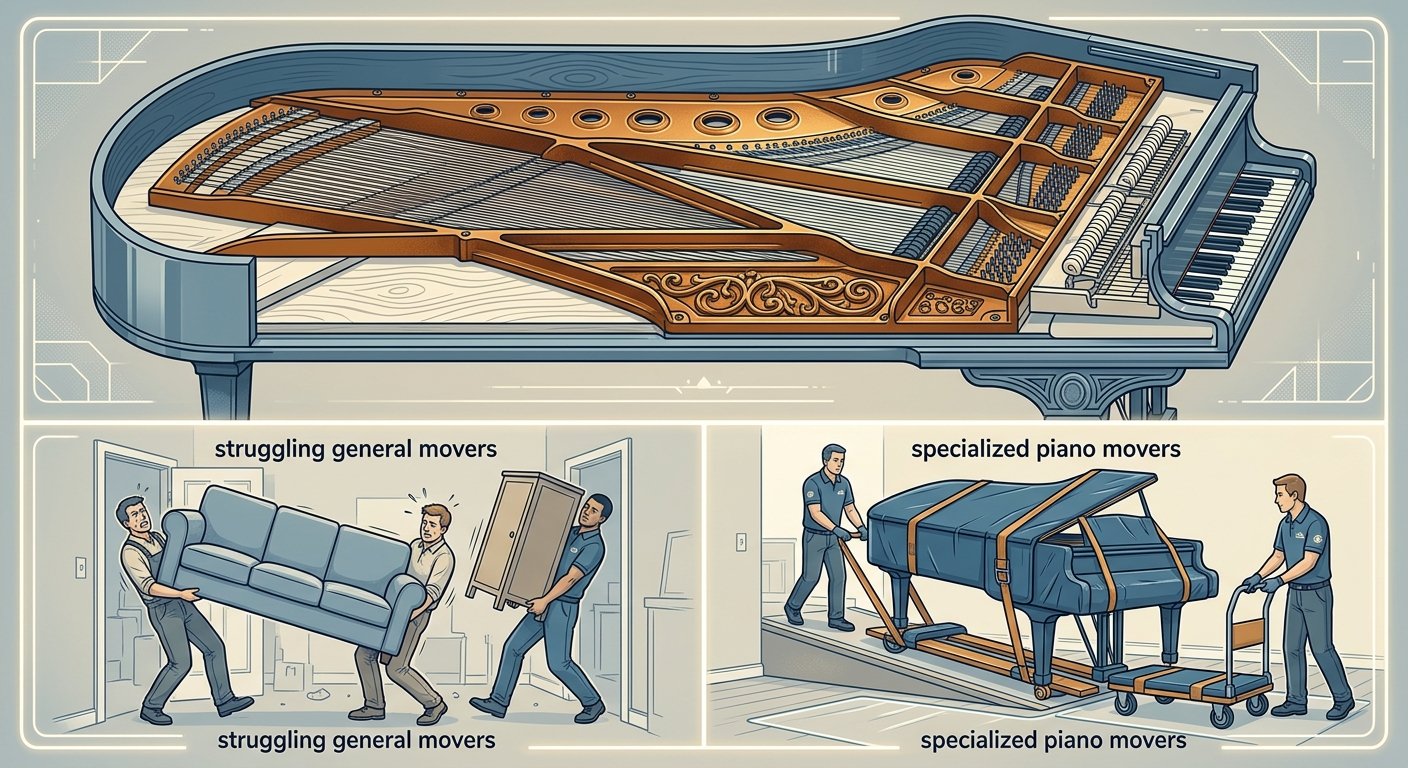
Not every moving company is equipped to handle a piano. General movers know how to load furniture and boxes efficiently, but piano moving requires a completely different skill set and a specific set of tools.
Pianos are built around a cast-iron plate (also called the frame or harp) that holds thousands of pounds of string tension. The exterior finish is sensitive to moisture, pressure, and impact. The legs and pedal lyre on a grand piano are removable—but removing and reattaching them incorrectly can cause lasting damage. Even the way a piano is tilted during a move can affect its internal regulation.
Professional piano movers use specialized piano boards, heavy-duty straps, padded blankets, and four-wheel dollies designed specifically for the weight distribution of pianos. They know how to navigate tight doorways, stairwells, and elevator thresholds without putting stress on the instrument’s vulnerable points.
According to the Piano Technicians Guild, improper handling during a move is one of the leading causes of piano damage—including cracked soundboards, broken legs, and internal misalignment that requires costly repair. That’s not a risk worth taking to save a few dollars.
What to Look for in a Piano Moving Company Near You
1. Verified Experience with Your Piano Type
There’s a big difference between moving an upright piano and moving a grand or baby grand. Make sure the company you hire has specific, documented experience with your instrument type. When you search for a piano moving company near me, don’t just look at general mover listings—ask directly whether they’ve moved grands, spinets, uprights, or console pianos.
At Hall’s Local Movers, we’ve been handling piano moves throughout Palm Beach County for 39+ years as an owner-operated team. That means when you call us, you’re talking to the people who will actually show up and do the job—not a call center scheduling a subcontracted crew.
2. Proper Licensing and Insurance
This is non-negotiable. Any legitimate moving company operating in Florida must be properly licensed and insured. For piano moves specifically, you want to confirm that the company’s insurance actually covers high-value items—some general liability policies have exclusions or caps that wouldn’t come close to covering a Steinway grand.
Florida’s Department of Business and Professional Regulation oversees various contractor and service licensing in the state. For household movers, licensing is administered through the Florida Department of Agriculture and Consumer Services. Always ask for proof of licensing before you sign anything.
3. Transparent, Itemized Pricing
Piano moving costs vary based on several factors: the size and type of piano, the distance being moved, the number of stairs involved, elevator access in a condo building, and whether the destination requires special rigging. A trustworthy piano movers Palm Beach County company will give you a clear, itemized quote upfront—not a vague estimate that balloons on moving day.
At Hall’s Local Movers, we believe in transparent pricing with no hidden fees. What we quote is what you pay. If your move involves a spiral staircase in a Delray Beach townhome or a freight elevator in a Palm Beach high-rise, we factor that in from the start.
4. Knowledge of Local Building Regulations
Palm Beach County has a wide variety of living situations—gated communities in Wellington, historic homes in West Palm Beach, oceanfront condos in Palm Beach, and luxury high-rises in Boca Raton. Each comes with its own access rules, elevator reservations, COA regulations, and loading dock requirements.
A local mover who knows these buildings and neighborhoods will save you time, stress, and potential fines. A national franchise that sends unfamiliar crews doesn’t have this advantage. When you hire professional piano movers in Florida with real local roots, that neighborhood knowledge is built into every move they handle.
5. References or Verifiable Reviews
Don’t rely solely on a company’s website. Look for verified reviews on Google, check for any complaints with the Better Business Bureau, and ask the company directly for references from past piano moves. A company with 39+ years in the community will have a track record you can actually research.
Palm Beach County-Specific Challenges for Piano Moves
Moving a piano anywhere has its challenges. Moving one in South Florida adds a few more to the list.
Heat and Humidity
Florida’s climate is genuinely tough on wooden instruments. Extreme heat and high humidity can cause wood to expand and contract, which affects the piano’s tuning and structural integrity. Limiting the time your piano spends in direct sun or in a hot moving truck matters. Experienced local movers understand this and plan accordingly—moving efficiently and minimizing exposure time.
Condo and HOA Access Rules
Many Palm Beach County communities require advance notice for moves, restrict move-in times to specific windows, and require movers to use specific entrances or service elevators. If you’re moving a grand piano into a high-rise on Flagler Drive or a condo community in Boca Raton, you’ll want a mover who’s navigated those logistics before.
Hurricane Season Timing
If your move falls between June and November, you’re in hurricane season. It’s worth coordinating your piano move well in advance and having a contingency plan in place in case of a weather delay. A local company will understand these seasonal realities and work with you to plan flexibly.
Questions to Ask Before You Book
Before you hire any upright piano movers or grand piano specialists in Palm Beach County, ask these questions:
- Have you moved this specific type of piano before (grand, upright, baby grand, digital stage piano)?
- What equipment do you use—piano board, dolly, padded blankets, straps?
- Are you licensed and insured, and does the insurance cover high-value instruments?
- What’s included in your quote, and what could change the final price?
- Are you familiar with the building or community I’m moving to or from?
- Will the same crew handle the entire move, or do you use subcontractors?
The answers will tell you a lot. Vague responses or reluctance to confirm licensing should be red flags.
Frequently Asked Questions
How much does it cost to move a piano in Palm Beach County?
Piano moving costs in Palm Beach County typically range depending on the piano type, distance, access points, and any special requirements like stairs or elevator use. Upright pianos generally cost less to move than grands. The best way to get an accurate figure is to request an in-person or detailed phone quote from a licensed local mover. At Hall’s Local Movers, we provide transparent quotes with no surprise fees added on moving day.
Do I need to tune my piano after it’s moved?
Yes, almost always. Even a careful, professional move involves changes in temperature, humidity, and position that affect a piano’s tuning stability. The Piano Technicians Guild recommends allowing the piano to acclimate to its new environment for two to four weeks before having it tuned by a registered piano technician.
Can movers move a piano up stairs?
Yes, with the right equipment and crew. Stair moves require additional planning, specialized stair-climbing dollies, and enough experienced team members to manage the weight safely. This is why it’s critical to be upfront with your mover about any stairs involved—both at the origin and destination—so they can bring the right equipment and crew size.
Is it safe to move a piano in a regular moving truck?
A piano can be transported in a standard moving truck if it is properly padded, secured, and positioned correctly. What matters most is how it’s loaded and protected. Professional piano movers use piano boards and industrial padding specifically to prevent damage during transport. This is why experience matters—improper loading in any truck can cause damage.
How far in advance should I book a piano mover?
For moves in Palm Beach County, booking two to four weeks in advance is a reasonable target for most moves. If your move involves a condo building that requires elevator reservations or HOA approval, give yourself at least three to four weeks to coordinate access. During peak season (winter months in South Florida), earlier is always better.
The Bottom Line
Your piano deserves more than a “we’ll figure it out” approach on moving day. Whether you’re moving a family heirloom upright across West Palm Beach or relocating a concert grand to a new Boca Raton studio, the right moving team makes all the difference.
Hall’s Local Movers has spent 39+ years earning the trust of Palm Beach County families, professionals, and retirees—one careful, transparent, owner-operated move at a time. We know these neighborhoods, these buildings, and what it takes to move a piano right. Visit our piano moving page to learn more about how we handle specialty instruments, or give us a call to talk through the details of your specific move. No pressure, no jargon—just honest, local expertise you can count on.

About Hall's Local Movers
Hall's Local Movers is an owner-operated moving company serving Palm Beach County with 39+ years of local expertise. They specialize in stress-free residential and commercial relocations with a personal care approach that treats your belongings like their own. Unlike corporate movers, they provide transparent pricing with no hidden fees, deep knowledge of Palm Beach County neighborhoods and regulations, and hands-on service from packing to final placement. Visit hallsmovers.com →