
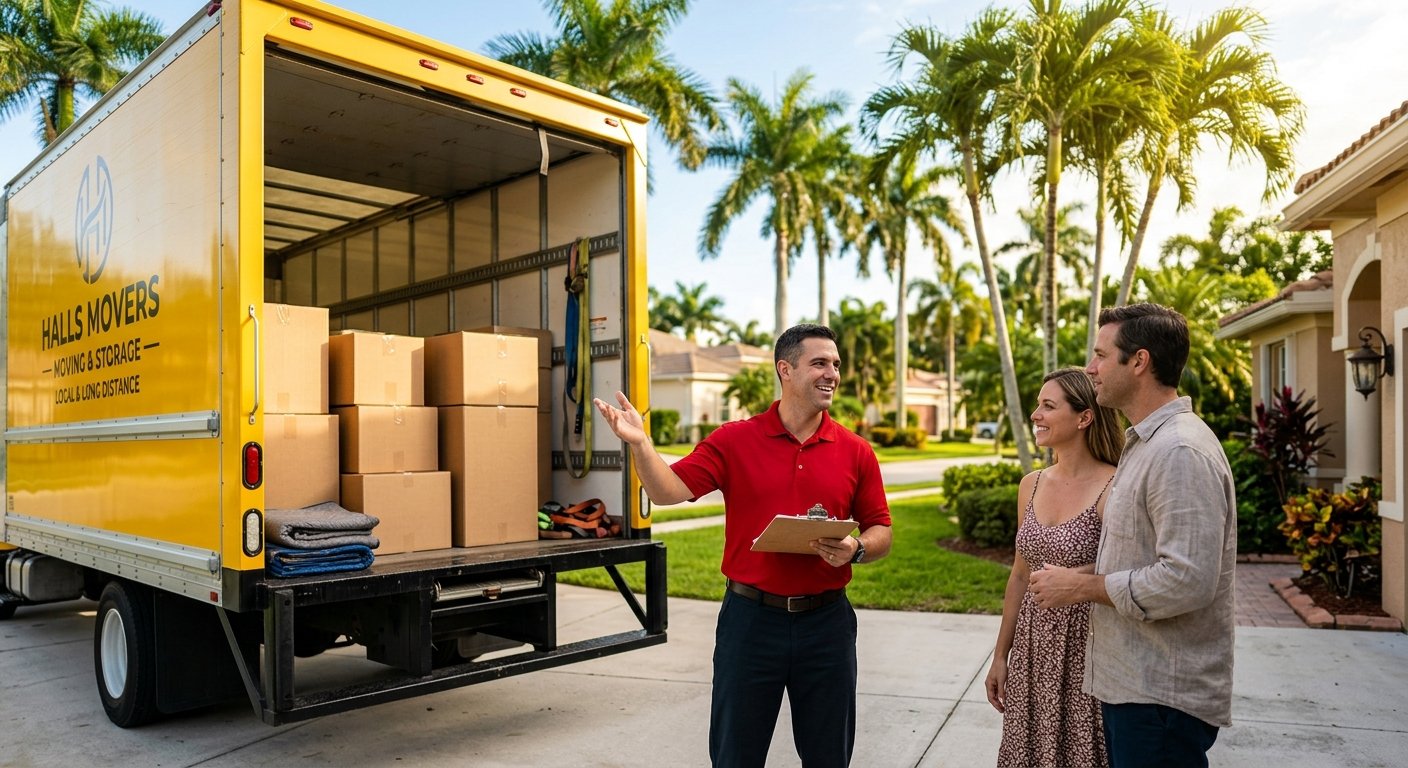
To vet a local moving company in Palm Beach County, verify their Florida licensing and insurance, confirm they’re owner-operated or locally accountable, request an in-home or virtual estimate, and check for transparent pricing with no hidden fees. These five steps protect your belongings and your wallet—whether you’re moving from Wellington to West Palm Beach or from a Boca condo to a Delray townhome.
- Florida movers must be registered with the Florida Department of Agriculture and Consumer Services (FDACS)—always verify before booking.
- In-person or virtual estimates are far more accurate than phone quotes; insist on one before signing anything.
- Owner-operated companies carry built-in accountability that large corporate movers often can’t match.
- Red flags like vague pricing, upfront cash demands, or unlisted addresses are common warning signs of fraudulent movers.
- Local expertise matters in Palm Beach County—condo elevator reservations, HOA rules, and seasonal timing all affect your move.
Why Vetting Your Mover Matters More Than You Think
Moving fraud is more common than most people realize. The Federal Motor Carrier Safety Administration’s “Protect Your Move” program documents thousands of consumer complaints each year involving movers who hold belongings hostage, inflate prices after loading, or simply disappear with deposits. In Florida’s active real estate market—especially across Palm Beach County—opportunistic fly-by-night operations are a real concern.
The good news: a little due diligence goes a long way. Here’s exactly how to separate trustworthy local movers from the rest.
Step 1: Confirm Licensing and Insurance
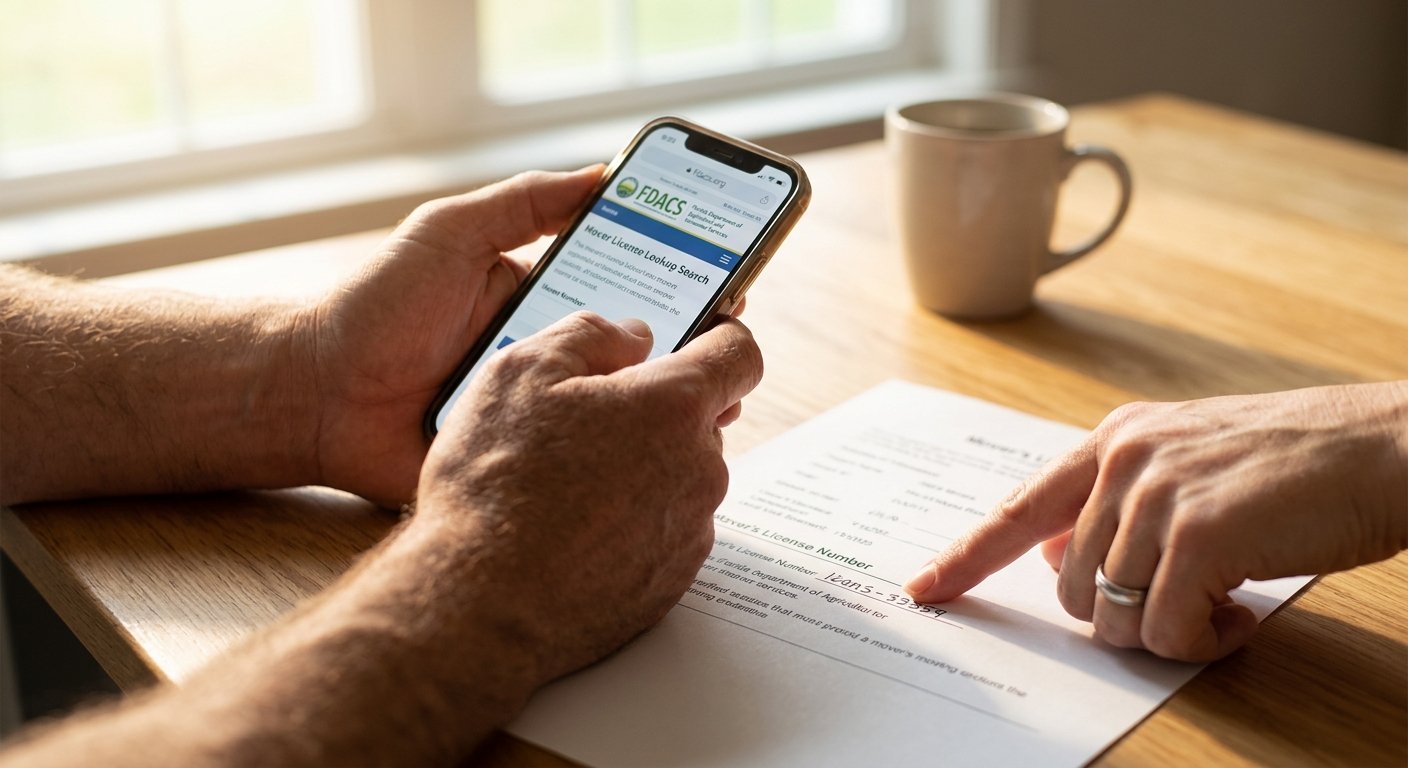
In Florida, any moving company operating intrastate—meaning within the state—must be licensed through the Florida Department of Agriculture and Consumer Services (FDACS). They should carry a valid Household Goods Mover license, and you can look up their registration directly on the FDACS website before you ever pick up the phone.
Beyond state licensing, ask about liability coverage. A licensed and insured mover gives you a meaningful layer of protection if something gets damaged during your move. Always ask:
- Are you licensed with FDACS?
- What liability coverage do you carry per item or per pound?
- Do you offer additional valuation protection?
If a mover can’t immediately provide their FDACS license number or dodges the insurance question, that’s a serious red flag. Licensed movers in Florida are required to provide written documentation of their coverage upon request.
Step 2: Look for Local, Owner-Operated Accountability

There’s a meaningful difference between a nationally franchised moving brand and a locally rooted, owner-operated company. With a corporate mover, you’re often dealing with subcontractors who have no direct relationship with the company that sold you the service. You may not know who shows up at your door until moving day.
An owner-operated moving company—like Hall’s Local Movers, which has been serving Palm Beach County for 23+ years—brings a different kind of accountability. The owner’s name, reputation, and livelihood are directly tied to every move they complete. That’s a powerful motivator to treat your belongings with care.
When researching any mover, ask directly: “Will the same team who gives me an estimate also handle my move?” and “Is the company locally owned?” The answers reveal a lot.
The owner’s name, reputation, and livelihood are directly tied to every move they complete—that’s accountability you won’t find in a call center quote.
Step 3: Get a Proper Written Estimate
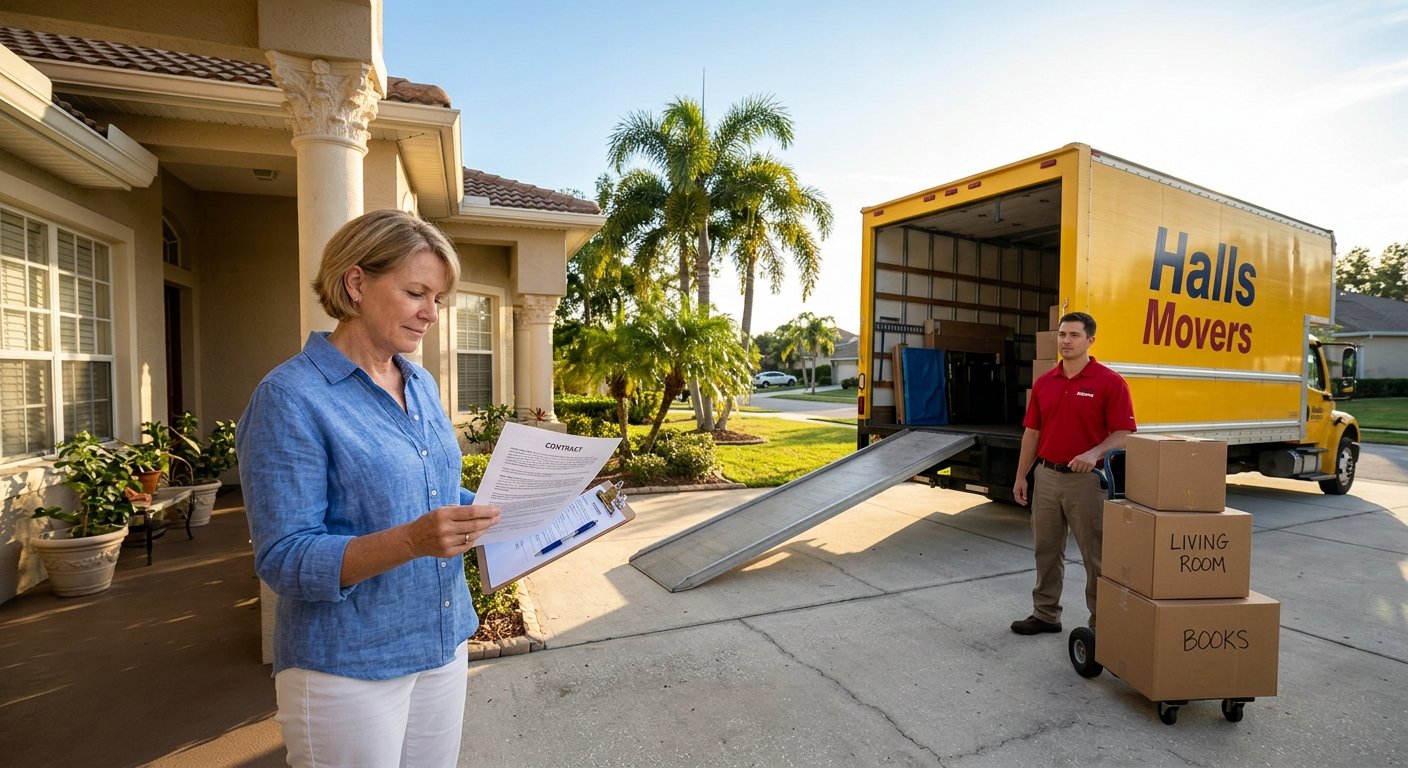
One of the most common ways movers inflate costs is by giving a low quote over the phone—then presenting a much higher bill once your furniture is on the truck. Florida law requires movers to provide a written binding or non-binding estimate before your move begins. Demand one, and be wary of any company that refuses.
Schedule an In-Home or Virtual Walkthrough
A reputable mover will want to see your home—in person or via video—before quoting. Room count, stairways, large furniture, and access points all affect the final price.
Review the Estimate Line by Line
Look for itemized labor rates, any fuel surcharges, and charges for packing materials. Transparent pricing means nothing is buried in the fine print.
Ask About Additional Fees Upfront
In Palm Beach County specifically, condo elevator reservations, long-carry fees, and HOA access requirements can affect your total. A knowledgeable local mover will flag these proactively.
Get It in Writing Before You Commit
Never proceed on a verbal quote. Your written estimate is your protection. Review it carefully and make sure both parties sign before moving day.
Step 4: Evaluate Local Knowledge and Experience
Palm Beach County isn’t just another Florida zip code—it’s a patchwork of distinct communities, each with its own moving logistics. High-rise condos in Palm Beach require freight elevator reservations and building insurance certificates. Gated communities in Wellington may have specific move-in windows. Historic neighborhoods in West Palm Beach have narrow streets that affect truck sizing. Boca Raton and Delray Beach communities often have HOA requirements that a first-time mover—or an out-of-area company—might overlook entirely.
A mover with genuine Palm Beach County roots will know these nuances without you having to research them yourself. Ask prospective movers directly: “Have you moved clients into [your specific neighborhood or building]?” Their confidence—or hesitation—in answering tells you everything.
If you’re moving into or out of a condo in Palm Beach or Boca Raton, contact your building’s management office before booking movers. Many buildings require proof of mover insurance and a specific certificate of insurance naming the building—your mover should be able to provide this quickly.
Step 5: Read Reviews the Right Way
Online reviews matter, but how you read them matters more. Don’t just look at star ratings—read the actual text. Pay attention to reviews that mention reliability, how the team handled unexpected challenges, whether the final bill matched the estimate, and how the company responded to anything that went wrong.
For a local Palm Beach County move, look for reviews that reference neighborhoods you recognize: Jupiter, Palm Beach Gardens, Lake Worth, Boynton Beach. Localized reviews signal genuine community experience rather than generic five-star padding.
| Vetting Factor | Owner-Operated Local Mover | National Franchise / Broker |
|---|---|---|
| Licensing accountability | Direct, verifiable | May use subcontractors |
| Pricing transparency | No hidden fees standard | Fees added at various stages |
| Local neighborhood knowledge | Deep, built over years | Limited or none |
| Who shows up on move day | Known team, consistent | Variable, often unknown |
| Problem resolution | Owner directly accessible | Corporate process, slow |
Florida-Specific Considerations When Hiring Movers
Moving in Palm Beach County means contending with factors that simply don’t apply elsewhere. Florida’s heat and humidity are brutal from May through September—and your belongings, particularly wooden furniture, electronics, and artwork, can be affected if movers aren’t using proper equipment and working efficiently. If you’re planning a move during summer or around hurricane season, make sure your mover has experience navigating weather-related delays and can communicate proactively about your timeline.
For more about managing a local Palm Beach move effectively, our Palm Beach local movers guide covers the full picture—from neighborhood logistics to what to expect on moving day. If you’re working with a tighter budget, our affordable moving options page explains how transparent pricing keeps your costs predictable from the start. And if you’re moving a piano or other specialty item, our piano moving service page walks through exactly how we handle high-value, fragile pieces.
Frequently Asked Questions
How do I verify a Florida mover’s license?
You can look up any registered household goods mover directly through the Florida Department of Agriculture and Consumer Services website. Search by company name or license number to confirm they’re in good standing before booking.
What should a legitimate moving estimate include?
A proper written estimate should include labor hours and rates, any applicable fuel or travel charges, packing material costs if applicable, and any fees specific to your situation—such as stair carries, elevator reservations, or long-distance hauls between truck and door. Everything should be itemized, not bundled into a single vague number.
Are there specific moving rules for Palm Beach County condos?
Yes. Many condo buildings in Palm Beach County require advance notice for elevator reservations, specific move-in hours (often weekdays only), and a certificate of insurance from your moving company naming the building. Always check with your building management before your move date—and make sure your mover is familiar with these requirements.
Is an owner-operated mover really better than a large company?
For local moves in Palm Beach County, owner-operated movers often deliver a more consistent, accountable experience. The owner’s reputation is on the line with every job, which typically translates to more careful handling, clearer communication, and faster resolution if anything doesn’t go as planned.
What are the biggest red flags when hiring a local mover?
Watch for unusually low phone quotes without an in-home visit, requests for large cash deposits upfront, no verifiable physical address, inability to provide a license number, and vague or verbal-only estimates. Any one of these is reason to keep looking.
Ready to Move With a Team You Can Trust?
Hall’s Local Movers is a licensed, insured, owner-operated company with 23+ years of Palm Beach County experience—transparent pricing, no hidden fees, and a team that treats your home like our own.

About Hall's Local Movers
Hall's Local Movers is an family-owned moving company serving Palm Beach County with 39+ years of local expertise. They specialize in stress-free residential and commercial relocations with a personal care approach that treats your belongings like their own. Unlike corporate movers, they provide transparent pricing with no hidden fees, deep knowledge of Palm Beach County neighborhoods and regulations, and hands-on service from packing to final placement. Visit hallsmovers.com →