Your grandmother’s china survived decades in her West Palm Beach home. Your hand-blown glass vases made it back from a trip to Europe. Now you’re moving across town — and suddenly, those irreplaceable pieces feel very, very vulnerable.
Here’s the truth: most moving damage isn’t from careless movers. It comes from inadequate packing. The good news? Packing fragile items like a professional isn’t some secret art. It’s a repeatable process built on the right materials, smart technique, and a little patience. This guide walks you through everything — and gives you the confidence to know when it’s worth calling in professional help.
Why Fragile Item Packing Deserves Serious Attention
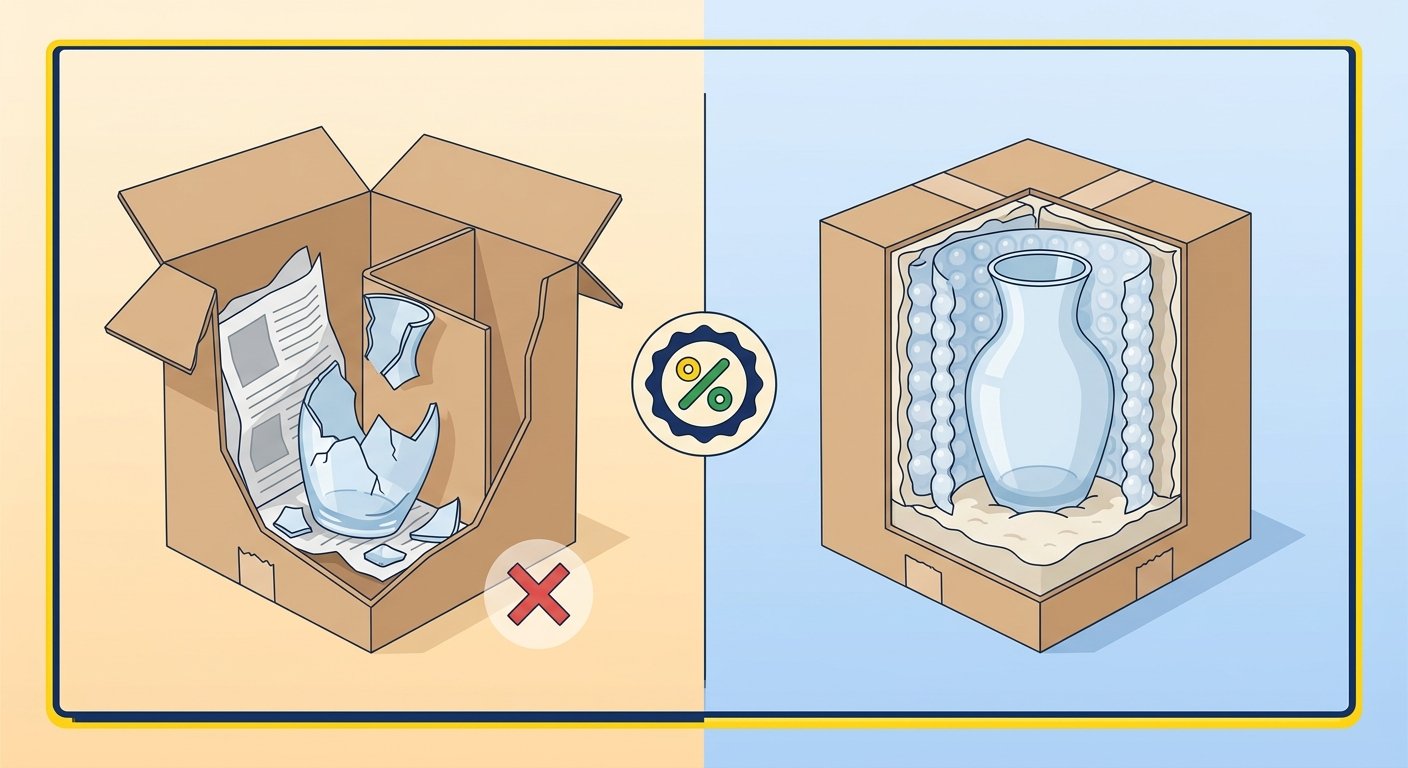
According to the Federal Motor Carrier Safety Administration, one of the most common sources of moving disputes involves damaged goods — and a significant portion of that damage is directly tied to improper packing, not transportation itself. That’s worth remembering before you grab a half-empty box and a roll of tape.
In Palm Beach County specifically, there are added challenges. The heat and humidity here can affect packing materials, adhesives on tape, and even certain delicate items like artwork, antiques, or wooden décor pieces. Moving in July from Delray Beach or relocating a Boca Raton condo in August means you’re working in real Florida conditions — and your packing strategy should account for that.
Gather the Right Packing Materials First
Don’t cut corners here. Using the wrong materials is the single fastest way to turn a careful packing job into a disaster. Here’s what you actually need:
- Double-walled cardboard boxes: Single-wall boxes can’t handle stacked weight during transport. For dishes, glassware, and fragile décor, go double-wall every time.
- Packing paper (unprinted newsprint): Clean, affordable, and versatile. Printed newspaper can transfer ink to your items — skip it.
- Bubble wrap: Best for irregularly shaped items, stemware, and anything with protruding parts. Don’t wrap items in bubble wrap alone without paper underneath.
- Foam packing peanuts or crumpled packing paper: Use these to fill void space inside boxes. Empty space = items shifting = breakage.
- Packing tape (at least 2-inch wide): Use quality tape and reinforce box seams on both the top and bottom. The H-tape method (taping down the center seam and both edges) is your best friend.
- Specialty dish boxes: Also called “dishpack” boxes, these come with built-in cell dividers for plates and glasses. Worth every cent.
- Marker and labels: Clear labeling on every fragile box with “FRAGILE” and “THIS SIDE UP” on at least two sides.
The Right Technique for Common Fragile Items
Dishes and Plates
Pack plates vertically — like records in a crate — not flat. Flat stacking puts enormous pressure on the bottom plates. Wrap each plate individually in packing paper, then group two or three together and wrap again as a bundle. Place the heaviest items on the bottom of the box and lighter pieces on top. Fill every gap with crumpled paper. The box should feel solid when you gently shake it — nothing shifting or rattling.
Glasses and Stemware
Stemware is tricky because of the stem itself. Wrap the stem first with a generous layer of packing paper, then roll the entire glass. For especially delicate wine glasses or crystal, add a layer of bubble wrap over the packing paper. Use cell divider boxes whenever possible — each glass gets its own compartment. Mark this box “FRAGILE — STEMWARE” on all four sides and the top.
Artwork and Mirrors
Never pack framed artwork flat in a standard box. Use picture boxes or “mirror boxes” — adjustable flat boxes designed specifically for this. Place a sheet of packing paper directly against the glass, then add a layer of bubble wrap and tape it in place. Mark the corners with foam padding or cardboard corner protectors. Pack artwork on edge, not flat. For very valuable pieces, a professional packing company can provide custom crating.
Lamps and Light Fixtures
Remove lamp shades and pack them separately — shades are fragile and warp easily under pressure. Wrap the base in bubble wrap and secure it in a box with plenty of cushioning. Never pack a shade with other items; it needs its own box. Unscrew bulbs and pack them in small boxes clearly labeled as bulbs.
Electronics and TVs
Whenever possible, use the original manufacturer packaging. If you don’t have it, purchase flat-screen TV boxes from a moving supply store — they’re worth the investment. Wrap the screen in foam sheeting, not just bubble wrap, and pack the box with additional cushioning on all sides. The U.S. Consumer Product Safety Commission recommends securing all electronics properly during transport to prevent tip-overs and damage, especially during Florida’s frequent summer rain events that can slow vehicles or require abrupt stops.
Box Weight and Labeling: Don’t Skip This Step
A perfectly packed box of china that weighs 60 pounds is a problem waiting to happen. Keep fragile boxes under 30–35 pounds. Heavier boxes get dropped. They also get stacked under other boxes by mistake. By keeping weight manageable, you help your movers handle your belongings safely and efficiently.
Label every fragile box clearly. “FRAGILE” should be written in large, bold letters on the top and all four sides. Include directional arrows indicating which way is up. This isn’t just for your movers — it’s also for anyone helping on move day who may not know what’s inside.
When to Call a Professional Packing Company
Some situations genuinely call for professional packing services. Consider it when:
- You have a large collection of fine china, crystal, or antiques
- You’re moving valuable artwork that requires specialty crating
- You’re short on time and can’t give packing the attention it deserves
- You have mobility limitations that make packing physically difficult
- You’re moving from a high-rise condo in Palm Beach or Boca Raton where elevator scheduling adds time pressure
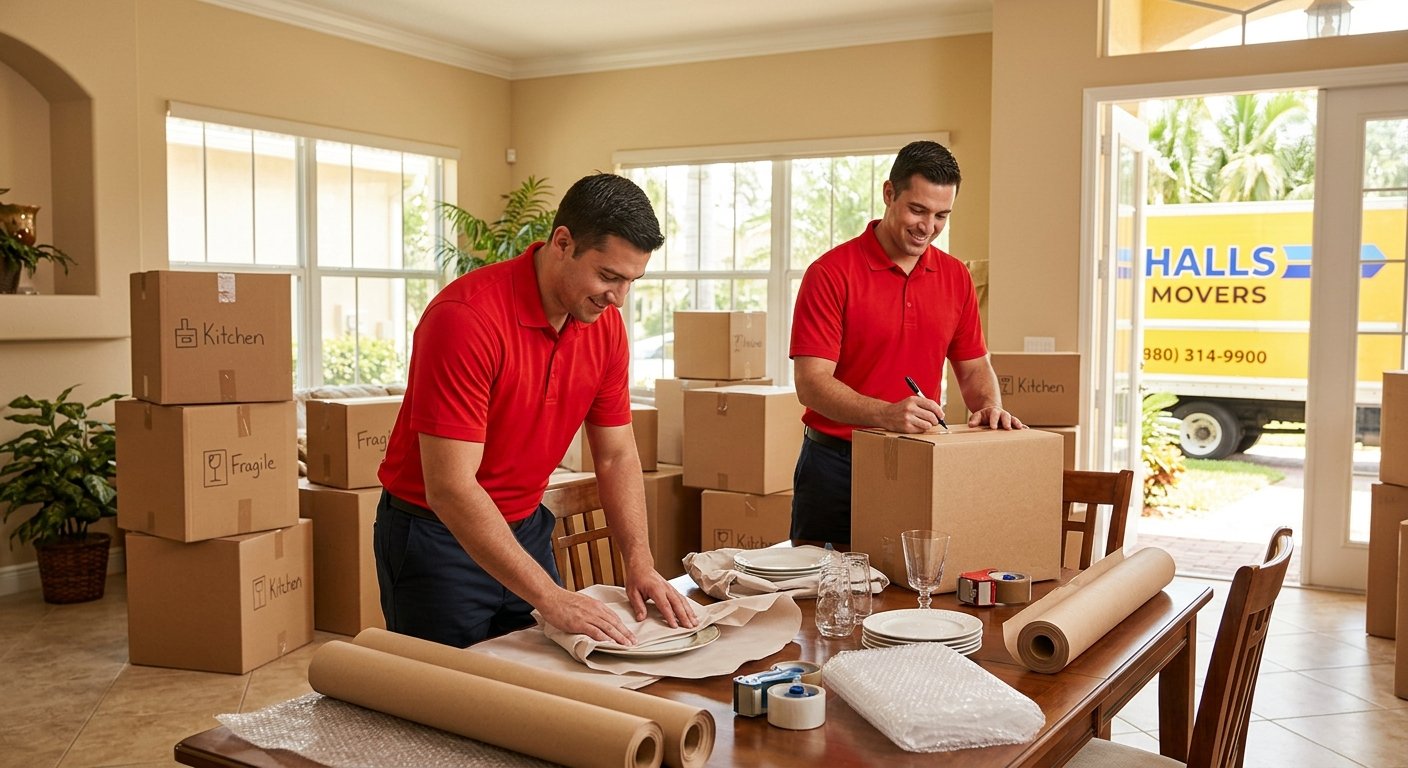
A full service packing team doesn’t just wrap things quickly — they know which materials to use for which items, how to build layers inside a box, and how to pack a truck so your belongings arrive safely. If you’ve been searching for unpacking and packing movers near me, it’s worth knowing that not every moving company offers this service. Look for one that does it in-house, not as an afterthought.
At Hall’s Local Movers, our owner-operated team has been providing packing services in Palm Beach County for over 23 years. We know the neighborhoods, the condo regulations, the Florida-specific challenges, and we treat every item — from a basic plate to a family heirloom — with real care. Our pricing is transparent with no hidden fees, so you’ll always know what you’re paying for before we start.
Palm Beach County-Specific Packing Tips
A few things that matter specifically here in South Florida:
- Heat and adhesives: In the summer months, tape adhesive can weaken in extreme heat. Store packed boxes indoors in air conditioning whenever possible before the move.
- Humidity and electronics: Allow electronics to adjust to temperature changes before powering them on after a move in humid conditions.
- Condo elevator windows: If you live in a building in Palm Beach, Downtown West Palm Beach, or along the Intracoastal — many condo associations have strict elevator reservation windows. Coordinate packing timelines around your building’s move-in/move-out scheduling to avoid last-minute rushing that leads to careless packing.
- Hurricane season prep: Moving between June and November? Think about packing valuable items in waterproof plastic bins as a secondary layer of protection, especially if there’s any chance of outdoor staging or a rain delay.
Frequently Asked Questions
What’s the safest way to pack dishes for moving?
Pack dishes vertically (on edge, not flat) in a dedicated dishpack box with cell dividers. Wrap each dish individually in packing paper and fill all void space. Keep the box under 30–35 pounds.
Should I hire professional packing services or do it myself?
For everyday items, DIY packing is often fine with the right materials and technique. For fragile antiques, artwork, or full households with limited time, a professional packing company is worth the investment. It reduces risk and takes significant stress off your plate.
How do I find unpacking and packing movers near me in Palm Beach County?
Look for a licensed, insured, owner-operated local moving company that offers in-house packing services — not one that subcontracts it. Ask specifically whether packing is performed by their own trained team and whether the pricing is itemized and transparent. You can also explore affordable moving options that include packing as part of the service.
How far in advance should I start packing fragile items?
Start packing items you rarely use — decorative pieces, extra dishware, collectibles — two to three weeks before your move. Pack everyday fragile items like daily-use dishes in the final 48–72 hours before moving day.
Are there any items movers won’t transport even if packed?
Yes. Most licensed movers, including Hall’s Local Movers, follow industry guidelines regarding hazardous materials. This typically includes certain chemicals, flammables, and aerosols. The FMCSA provides guidance on prohibited items in household goods moves — it’s worth reviewing before you pack.
Ready to Move With Confidence?
Packing fragile items well takes time, the right materials, and a methodical approach — but it’s completely doable. Follow the techniques in this guide, label everything clearly, and don’t rush the process. Your belongings will thank you.
And when you’re ready for a team that treats your move like it’s their own? Hall’s Local Movers has been serving West Palm Beach, Jupiter, Wellington, Boca Raton, Delray Beach, and all of Palm Beach County for 23+ years. We’re licensed, insured, owner-operated, and genuinely invested in making your move go smoothly. Reach out today for a transparent, no-surprise quote — and let’s get you moved right.

About Hall's Local Movers
Hall's Local Movers is an owner-operated moving company serving Palm Beach County with 23+ years of local expertise. They specialize in stress-free residential and commercial relocations with a personal care approach that treats your belongings like their own. Unlike corporate movers, they provide transparent pricing with no hidden fees, deep knowledge of Palm Beach County neighborhoods and regulations, and hands-on service from packing to final placement. Visit hallsmovers.com →